Table of contents
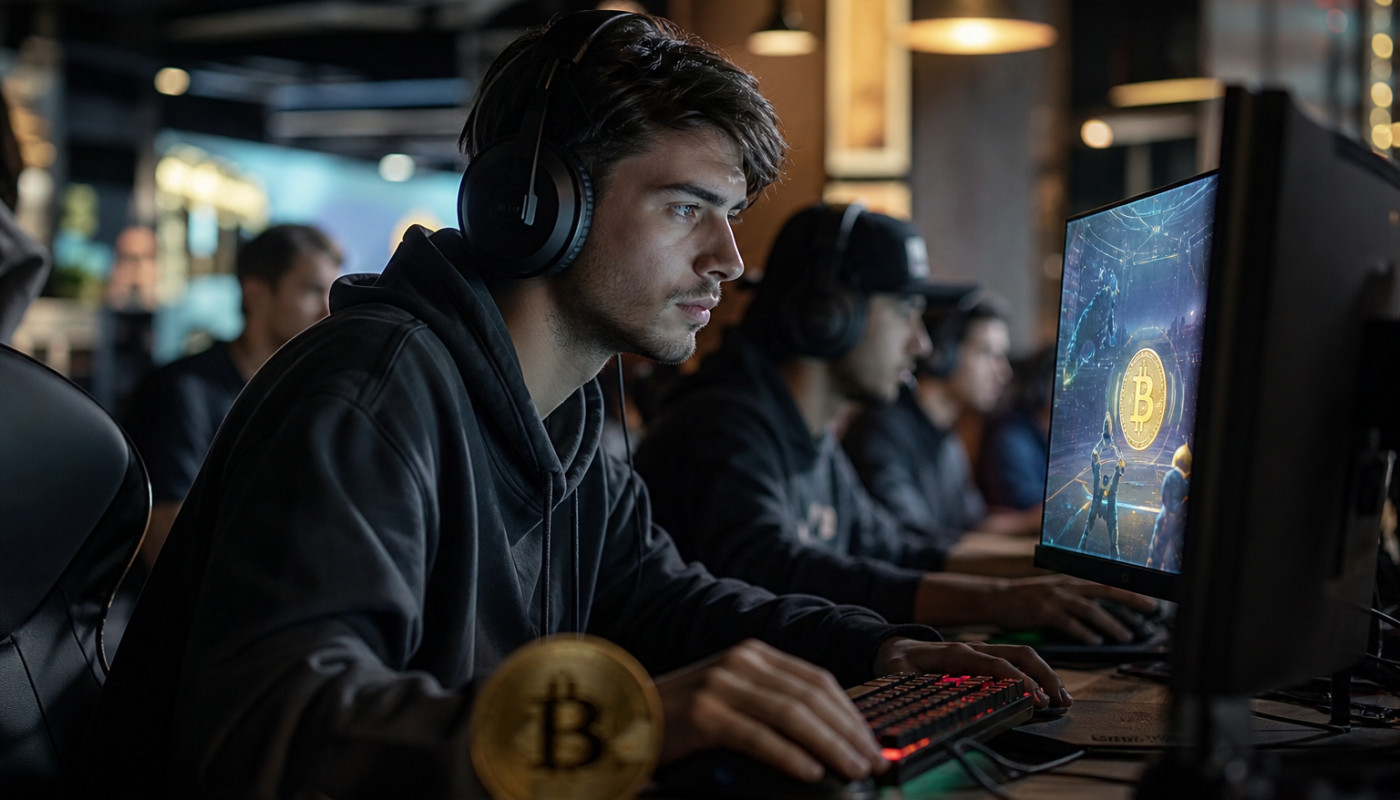
Bitcoin no longer lives in a vacuum, and neither does gaming. As crypto markets mature, developers are testing a once-taboo idea: building durable game economies that can survive speculation, regulation, and the relentless creativity of players. The result is a fast-moving contest between networks, studios, and business models, with Bitcoin increasingly framed not only as “digital gold” but as a settlement layer, a brand, and a benchmark for scarcity. For players, the question is simpler: can any of this feel fun, fair, and financially sane?
Speculation enters the lobby, then changes rules
Can a game economy stay a game? The moment tokens become tradable outside the client, players import the logic of markets, and every design decision starts to look like monetary policy. That dynamic is not theoretical: blockchain game activity has repeatedly spiked during bull runs, then thinned out when prices turned, leaving studios to explain why engagement depended on charts rather than content.
Data points show how intertwined incentives have become. DappRadar’s sector reports have consistently ranked games among the largest categories of on-chain activity, frequently accounting for a meaningful share of daily unique active wallets across tracked dapps, while the same reports also highlight how quickly usage can rotate between titles and chains when rewards shift. Separate measurements from chains and analytics firms regularly capture the same pattern: a small number of “whales” drive a disproportionate share of volume, and when emissions decline, liquidity follows. In practice, that means designers face a hard choice, either embrace financialization and build robust sinks, taxes, and anti-farming mechanics, or keep crypto peripheral and accept slower growth in a market trained to chase yield.
Even traditional economics becomes visible to players. Inflation is no longer a hidden spreadsheet; it is a token price on a public chart. If a studio prints too much currency, the community notices instantly, and if it prints too little, newcomers can be priced out of core items. Some projects now publish dashboards resembling central bank briefings, with treasury disclosures, burn schedules, and payout curves, because credibility becomes a resource as important as content updates. Bitcoin’s presence in this conversation is partly symbolic, the original template for verifiable scarcity, and partly practical, a reference point that pushes teams to justify why their in-game money should exist at all.
That is why “competition” in crypto gaming is not only studio versus studio, it is monetary model versus monetary model. One camp leans into high-velocity tokens and liquidity mining; another tries to peg value to time and skill, with non-transferable progression and limited secondary markets. Between them sits the hybrid approach, where crypto rails support ownership or settlement, but gameplay progression is insulated from market swings. The winners will likely be the ones who admit a basic truth early: players do not only optimize for fun, they optimize for advantage, and crypto simply gives them more tools to do it.
Bitcoin’s gravity, even without smart contracts
Is Bitcoin “too slow” for games? That critique dominated for years, yet the ecosystem around Bitcoin has changed, and so has the definition of what gaming needs from a chain. Most game logic never belonged on a base layer anyway; what studios want is credible settlement, recognizable branding, and rails that can move value with minimal trust. In that sense, Bitcoin competes less on feature lists and more on gravitas, because its security budget, liquidity depth, and cultural recognition remain unmatched in crypto.
The practical layer is evolving as well. The Lightning Network, designed for fast, low-cost payments, has grown from an experiment into an established payment network used by wallets and merchants, with public capacity metrics tracked over time. Capacity has fluctuated with market cycles and custodial design choices, but the broader point is that instant settlement in satoshis is no longer exotic. For certain game genres, especially competitive titles with micro-stakes, user-generated tournaments, or creator tips, Lightning-like payment rails can matter more than complex on-chain item systems, because they make small-value interactions viable without burying players in fees.
Meanwhile, token standards and “Bitcoin-adjacent” asset layers have multiplied, and regardless of where one stands on their trade-offs, they have broadened the competitive map. Some teams experiment with Bitcoin as the unit of account, while keeping items on other chains; others use Bitcoin rails for deposits and withdrawals, then run game economies on faster environments. In that landscape, a reader trying to understand the range of approaches can browse around this website, then compare it with the more common smart-contract-heavy models that dominate headlines.
Bitcoin’s real competitive edge may be psychological. A game economy asks players to believe that time spent grinding, crafting, and trading will not be wiped out by a patch or a rug pull. “Bitcoin-backed” language, even when it simply means payments rather than asset custody, can reduce perceived counterparty risk, rightly or wrongly, because it borrows from Bitcoin’s long track record. That is marketing, but marketing is not trivial when trust is scarce, and the industry’s early scandals made skepticism the default setting.
Studios now fight bots, whales, and themselves
Who actually benefits from “player-owned” economies? The slogan sounds egalitarian, yet on-chain transparency often reveals a familiar hierarchy: early adopters, high-capital players, and automated strategies capture outsize returns. In many blockchain games, the top cohort of wallets can control a large share of rare assets, liquidity pools, or governance votes, and the rest of the player base ends up renting access through scholarship-style arrangements or secondary-market markups. That may be efficient, but it is not always fun, and fun remains the most stubborn competitive moat in gaming.
Bots are the other permanent competitor, and crypto raises the stakes. When in-game actions map to real value, automation becomes rational, and studios find themselves building adversarial systems more typical of fintech than entertainment. Anti-cheat teams now think in terms of Sybil resistance, wallet clustering, and behavioral analytics, while also managing the privacy expectations of players who did not come to a game for KYC-like friction. Every extra layer of verification reduces fraud, and every extra step risks killing onboarding, especially on mobile where abandonment is brutal.
The revenue model complicates everything. Traditional free-to-play relies on whales too, but it hides the mechanics behind cosmetics and gacha probabilities. Crypto makes whale behavior visible and portable, and a whale who dislikes a balancing decision can dump on an open market, then broadcast the exit on social media. That public leverage can pressure studios into short-term appeasement, increasing emissions or buffing asset yields to keep prices up, even if it breaks the long-term economy. It is the same trap that hits unsustainable “play-to-earn” designs: if rewards must rise to retain users, the system becomes dependent on constant new entrants.
The more durable studios are starting to look boring, in the best way. They emphasize sinks that feel like gameplay, repair costs, crafting inputs, seasonal resets with clear communication, and limited monetary promises. Some separate “fun tokens” from “value tokens”, others cap extraction and reward skill. The industry is also experimenting with off-chain progression and on-chain settlement, a split that can keep the core loop enjoyable while still allowing ownership and trade. Competition, here, is not chain versus chain, it is design discipline versus the temptation to sell hype.
Regulators and platforms redraw the map
Will the app stores allow the future? Distribution is destiny in gaming, and platform policies have become a decisive battleground for crypto features. Apple and Google have tightened and clarified rules over time, often allowing certain blockchain-related apps while restricting how NFTs and tokens can be sold, unlocked, or used for in-app benefits. The details vary by jurisdiction and policy updates, but the message has been consistent: if crypto mechanics look like unregulated financial products, platforms will intervene, and friction at install time can erase the advantage of any novel economy.
Regulation adds another layer of competitive pressure. In Europe, the Markets in Crypto-Assets framework has set out a broad regime for crypto-asset issuers and service providers, and while games are not automatically “financial,” token issuance, custody, and exchange-like features can trigger compliance burdens. In the United States, enforcement-driven uncertainty has pushed many projects to geo-fence, restrict features, or avoid explicit yield promises. Studios that once rushed to issue tokens now weigh legal budgets, licensing exposure, and the reputational risk of looking like a securities offering dressed up as entertainment.
Yet regulation can also reward the disciplined players. Clearer rules favor teams that treat custody, disclosures, and consumer protection as product features, not afterthoughts. It also nudges the market toward simpler models, including Bitcoin-denominated payments and limited-scope digital ownership, rather than complex DeFi-in-a-game structures. Competition is therefore shifting from “who can ship the flashiest tokenomics” to “who can ship at all, on mainstream platforms, with a compliance story that does not implode.”
Over the next cycle, the most plausible winners may be games that treat crypto as infrastructure: fast deposits, cheap payouts, transparent markets for cosmetics or collectibles, and optional ownership that does not punish players who just want to play. Bitcoin’s role in that world is less about running game logic and more about being the settlement benchmark, a gravitational center that other systems must justify deviating from. That is competition in the crypto era, not only among chains, but among promises.
How to approach it without overpaying
Start with a capped budget, and assume volatility; only spend what you can lose, then prioritize games that let you test gameplay for free or with minimal deposits. Compare fees, withdrawal rules, and platform availability before you buy assets, and look for transparent disclosures on emissions and treasury policy. In some regions, consumer protections and tax rules may apply, so check local guidance before committing serious money.
Similar

Strategies For Sustaining Regional Networks In The Digital Age
Exploring The Impact Of Game Mechanics On User Engagement
The Future Of Mobile Gaming: In-depth Look At Casino Apps

Exploring The Impact Of Transaction Speed On User Loyalty?

Exploring The Latest Trends In Sustainable Fashion And Lifestyle

Betting on e-sports: when virtual competition becomes a lucrative playground

Exploring The Impact Of Exclusive Asian Fashion Trends On Global Style

Exploring The Impact Of Specialized Event Discovery Platforms On Local Cultures

Exploring The Benefits Of Playing Chicken-themed Casino Games On Mobile Devices

Strategies To Succeed In Multi-Level Chicken Crossing Challenges

The Impact of Blockchain Technology on Online Casinos
